
Frequently Asked Questions
Table of Contents
- 🟢 Is personal training suitable for beginners?
- 🦴 Can you help with my bad back / knee / shoulder?
- 🔄 Can you help if I am returning from injury?
- 🏥 Do you work with clients after surgery?
- ⚠️ Do you provide medical diagnosis or physiotherapy?
- 🧠 Why care about movement coaching?
- 🧭 What is movement coaching?
- 💆 What is sports massage and who is it for?
- ⭐ Why choose Health Movement?
- 👣 What happens in the first PT session?
- 📋 What do PT sessions involve?
- ⏱️ How long is a session?
- 💷 How much does it cost?
- 📅 When are sessions available?
- 📍 Where do sessions take place?
- 🔗 Can personal training and sports massage be combined?
- ❌ What is the cancellation policy?
🟢 Is personal training suitable for beginners?
Yes. Exercise routines are tailored to your experience, current fitness level, personal preferences, and many other factors, as described throughout this FAQ.
If you have limited experience with structured exercise in general, you will benefit greatly from having a coach to get you started. Here are a few reasons:
- Learning good technique before you pick up any bad habits (which can be difficult to unlearn)
- Knowing what to do and how much – exercise choice, reps, sets, weight, rest time, etc.
- Answering any questions you have as they become relevant for peace of mind and time saving.
🦴 Can you help with my bad back / knee / shoulder?
Maybe. A consultation would be the most effective way to find out.
See “Why care about movement coaching?” for an idea of how I may be able to help.
See “Do you provide medical diagnosis or physiotherapy?” for information about injury advice and referrals.
🔄 Can you help if I am returning from injury?
Yes. I provide exercise-based support for clients returning to training following injury.
This may include structured strength rebuilding, mobility work, and gradual progression back to normal activity (and ideally beyond).
Working With Other Professionals
Where appropriate, programmes will be designed to align with advice from your GP, consultant, or physiotherapist.
🏥 Do you work with clients after surgery?
Yes. I support clients who are returning to activity following surgery by focusing on safe load management, progressive strength development, and movement confidence.
Training plans are structured conservatively and can follow any guidance provided by medical professionals.
⚠️ Do you provide medical diagnosis or physiotherapy?
No. Health Movement provides personal training and sports massage services. Medical diagnosis and physiotherapy are outside of my remit.
I can give you advice based on my experience and help you find an appropriate healthcare professional who I believe will be best suited to diagnosing or treating your medical concerns.
I may advise you to seek appropriate medical assessment before beginning training, depending on your situation and what you’d like us to work on.
I work with an excellent private consultant physiotherapist, Sharon Thomas. She specialises in sports injury rehabilitation.
🧠 Why care about movement coaching?
📊 This Is Very Common
Do you experience recurring or persistent aches and pains in your low back, knees, hips, or shoulders?
These ailments can make moving around uncomfortable.
They can cause you to move awkwardly, leading to stiff and sore muscles and joints elsewhere.
They may not seem bad enough to see a GP or physio about, but they reduce your quality of life.
They are NOT just a product of “getting older”.
They are often caused by months or years of poorly optimised posture and movement. In other words: overusing some muscles and joints, and underusing others, leading to reduced comfort, strength and flexibility.
🛠️ How To Fix It
By understanding:
- which positions are safe and strong, and
- how to improve your ability to get into better positions over time
, and putting in consistent time and effort to improve your physical health, you will be able to improve your quality of life, comfort, strength, flexibility, and more.
🧭 What is movement coaching?
Movement coaching focuses on improving how you move, by:
- teaching you which positions are safe and strong, and
- giving you coaching cues to help you correct your posture and movement.
The benefits include:
- improved confidence when moving (especially after injuries)
- daily activities become easier and safer (less wear and tear on joints)
- physical exercises become more intuitive and effective
- physical labour becomes safer and more sustainable
💆 What is sports massage and who is it for?
Sports massage is a hands-on treatment focused on:
- reducing muscle tension and any associated pain/discomfort
- improving movement quality, and
- supporting recovery from training or everyday physical strain.
It is suitable for active individuals, desk-based workers, and those experiencing muscular tightness.
⭐ Why choose Health Movement?
Honest, Client-First Guidance
Your health and long-term progress are my priority.
I will always give you my professional opinion on what I believe is best for you.
Every aspect of your routine is adapted to suit your needs and preferences.
Purpose-Driven Training Design
I create a unique biomechanics-informed routine for each client, where every exercise has a purpose that is clearly explained, and the way each exercise is performed and progressed is tailored to the client and explained and demonstrated as thoroughly as they prefer.
Practical, Real-World Programming
Your time, experience, available equipment, any injuries, personal preferences and more are factored in when designing your routine.
👣 What happens in the first PT session?
The first personal training session can be one of the following:
- Free consultation (up to 30 minutes)
- Intro PT session (from 1 hour)
Regardless of which version you choose, in your first session we focus on understanding your goals, experience, availability, any injuries or limitations, your movement patterns, available equipment, and preferences regarding exercises, intensity, instruction, and competitiveness.
🤝 Free Consultation
It’s an informal conversation where I take notes as we talk.
The goal is to establish whether you would like to book an intro session, or if I can help direct you to a professional or resource that will best benefit you.
🎯 Intro PT Session
The intro session is an organic process that may involve branching out into various movement screening exercises and conversations.
I aim to find the most relevant and useful observations and corrective exercises, cues and routines within the limited time available.
By the end of the intro session, we will have a range of:
- useful exercises
- corrective cues
- teaching points
- things to think about during daily living (moving, eating, resting)
, as well as:
- your write up (all your relevant details and preferences that we discussed)
- a brief exercise plan, based on the movements we covered and your availability and equipment
📋 What do PT sessions involve?
Personal training sessions may cover a range of topics, depending on your current goals, needs, preferences, ability, availability, and any injuries or limitations.
🧩 Topics We May Cover
Use the links to jump to the relevant sections of this FAQ.
🚶 Posture & Daily Movement
Sessions involve learning how posture and movement patterns affect different muscles and joints, particularly regarding injury risk and recovery.
This is taught by example, using demonstrations, corrective cues, corrective exercises, and analogies where useful.
This applies to everyday positions and movements like:
- standing
- sitting
- walking
- using stairs
- carrying shopping
- picking up & carrying children
- household chores
🔁 Functional Movements
These are practical movements that are used in daily life, work, play and sports.
People familiar with common gym exercises may recognise many of them by name or appearance.
However, it is important to know:
- Safe execution – what to look for, how to correct issues
- Appropriate variations and progressions – depending on ability, goals, and any injuries
- Purpose and intentions – why choose each exercise, how to programme them
Examples of exercises and related functional movements:
- Squat – moving a sofa
- Lunge – tying your shoelace
- Deadlift – picking up a box
- Step Up – walking up stairs
- Press Up – getting up off the floor
- Pull Up – climbing a ladder
- Sit Up – getting out of bed
- Farmer’s Walk – carrying shopping bags
- Suitcase Carry – carrying a toolbox
- Sled Push – pushing a trolley
🤸 Mobility & Flexibility
Flexibility allows your joints to be moved through greater ranges of motion, passively.
Mobility allows you to actively move your joints through greater ROM, under control.
Example For Flexibility
Children are very flexible – they can safely be picked up with their arms overhead because their shoulders easily move through that position.
Example For Mobility
A person with good shoulder mobility can safely:
- lift a weight overhead, and
- if strong enough, can hang from a bar and initiate a pull up
without risking shoulder strain
, because their shoulders are strong and safe in that position.
🏋️ Compound Exercises
Compound exercises use multiple muscle groups and multiple joints to coordinate complex movements, which work well to prepare the body for daily life, work and play.
In contrast, isolation exercises attempt to reduce the number of muscles used, and often only work a single joint. These are useful for rehabilitation and targeted muscle growth (hypertrophy training).
Examples of Compound Exercises
- Squat
- Lunge
- Row
- Overhead Press
- Press Up / Bench Press
- Pull Up / Pull Down
🔀 Exercise Variations
Exercises often have many variations, depending on equipment used, equipment configuration, range of motion chosen, tempo, accessories, and other factors.
Examples of Squat Variations / Alternatives
- Bodyweight Squat
- Goblet Squat
- Barbell Back Squat, Low Bar
- Barbell Back Squat, High Bar
- Barbell Front Squat
- Sumo Squat
- Horse Stance Squat
- Pistol Squat
- Shrimp Squat
- Smith Machine Squat
- Hack Squat
- Leg Press
- Incline Leg Press
🧱 Core Training
Core training is important for several reasons:
- Spinal and joint health
- Balance
- Movement efficiency
- Strength and power transfer
I define the core muscles as all muscles that control the shape of the spine.
This means most of the back muscles, as well as the “abs” (six-pack), obliques, and deeper muscles like the TVA and QL.
Core training takes time to master.
The positional awareness, conscious cuing, independent breathing; and development of coordination, strength, and endurance of the core muscles may improve over months of practice.
It is easy to think you are doing a core exercise correctly, but a couple of corrective cues usually makes people realise how difficult properly executed core exercises can be, and to feel unfamiliar muscles working.
Core Training Fundamentals
These fundamentals are especially helpful for women experiencing pelvic floor or abdominal weakness after childbirth.
- Pelvic floor awareness
- Breathing & bracing strategy
Core Stability Training
I define core stability exercises as those whose primary goal is to prevent spinal movement (e.g. anti-flexion, anti-rotation)
There are basic static core stability exercises:
- Plank
- Side Plank
Then there are core stability exercise involving movement of limbs, whilst keeping the spine still:
- Bird Dog
- Dead Bug
- Suitcase Carry
- Pallof Press
Dynamic Core Training
Many core exercises inevitably involve some spinal movement.
To perform these safely and effectively, you should first be competent with the core stability exercises.
- Sit Up
- Crunch
- Oblique Crunch
- Side Plank Raise
- Swimmers
- Russian Twist
- Torso Rotation
⏱️ How long is a session?
Session duration can be arranged to suit your needs and preferences:
- 30 minutes (short massage, extra short PT session)
- 45 minutes (typical massage, short PT session)
- 60 minutes (full massage, normal PT session, hybrid session)
- 90 minutes (long PT session, group PT session)
Prices vary by session type and client booking frequency (weekly or block bookings receive discounts)
See Services section for details.
💷 How much does it cost?
See My Services & Prices for details.
📅 When are sessions available?
I’m generally flexible for time throughout the week.
I aim to accommodate my clients’ schedules as best I can.
Typical Availability
Weekdays, 8:00 – 21:00
Weekends and other weekday times can be arranged.
📍 Where do sessions take place?
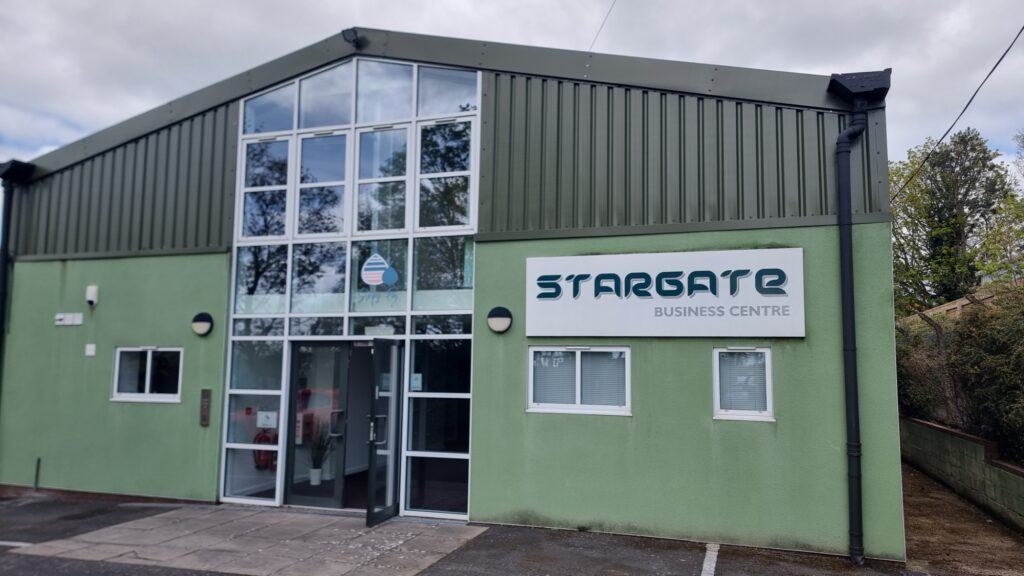
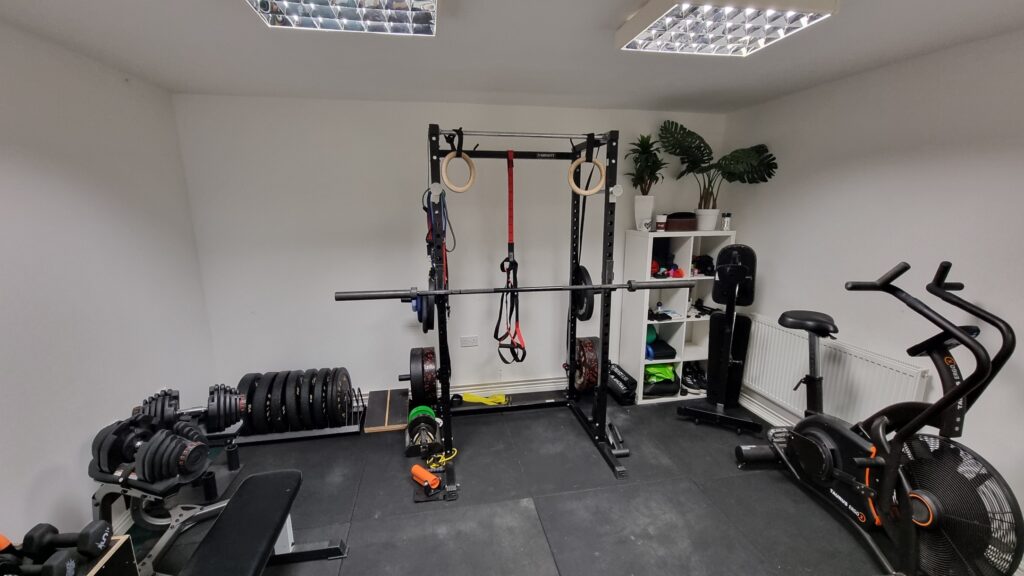
Sessions take place in my private one-to-one gym at Stargate Business Centre, Faraday Drive, Bridgnorth.
🏢 The Building
🏋️♂️ The Gym
Home sessions are available on request.
Travel time and fuel may be factored into pricing, where relevant. This will be agreed upon before sessions begin.
🔗 Can personal training and sports massage be combined?
Yes.
Hybrid sessions can be arranged, with time split in whatever way works best for you.
This is a more effective approach for improving mobility within a single session, with lasting effects.
❌ What is the cancellation policy?
The full fee is payable for sessions cancelled with less than 24 hours’ notice.
Rescheduling with less than 24 hours’ notice will incur a £10 fee.
🥚 Easter Eggs
📖 Definition
2. an unexpected or undocumented feature in a game, film, or piece of computer software, included as a joke or bonus.
🎥 What’s with the crazy videos?
You’re here, aren’t you?
🐦 Why ARE pigeons relevant?
Pigeons, like animals in general, move efficiently. They stabilise their heads while walking, conserve energy in flight, and navigate complex environments without overthinking.
Humans often do the opposite: unnecessary tension, poor coordination, and overcomplication.
This may be from spending too little time moving, too much time feeling stressed, and from overthinking things that have simple solutions.
Takeaways
- Good movement often looks simple, not impressive.
- Being active keeps you healthy – use it or lose it.
- To get things done, just begin – don’t overthink.
🌍 How should I prepare for life in general?
You can’t be prepared for every specific possibility.
But you can:
- work on your health
- meet people
- get stronger
- move better
- recover faster
- tolerate discomfort
- always learn more
These general capacities add up to help you through most situations in life.
Takeaway: be adaptable and persistent.
🐔 Do chickens breakdance?
No.
🕺 What do chickens and breakdancing have in common?
Chickens stabilise their heads while their bodies move.
Breakdancers stabilise their bodies while everything else moves.
Both rely on:
- rapid coordination
- balance under shifting load
- efficient movement patterns
One is instinctive.
The other is trained.
Takeaway: control comes from coordination, not just strength. Both require practice.
🤔 Can you reduce my confusion about Reel 5?
“Do you even lift bro?” is an early Internet gym culture phrase used to question someone’s credibility or competence to humorous effect.
The bench press, despite being very popular in gym culture, is a relatively unusual movement that doesn’t translate directly to most real-world applications.
It builds and tests upper body pushing strength and develops the chest, shoulder and triceps muscles.
But you rarely find yourself in a position with your back against the floor where you need to push something heavy upward.
At risk of over-explaining Reel 5, chronologically we see the following lifts:
- ski
- car
- pancake (thus spirits)
- confused person
Takeaway: many things can be lifted, and it’s usually a good thing.
🥞 Do you provide pancake recipes?
Sure.
🥄 Simple Pancakes
I haven’t tried these BBC Food recipes but the website provides metric and imperial measurements, simple instructions, and cooking tips, and the reviews are good.
Fluffy American pancakes recipe – BBC Food
👑 Best Pancakes
The pancakes I make myself are more involved, but worth the effort for the experience.
This is not health food. Enjoy on occasions.
The Video – The Best Pancakes You’ll Ever Make | Epicurious 101
Takeaway: it’s good to eat things that you enjoy, but if the food is a problem there are always alternatives.